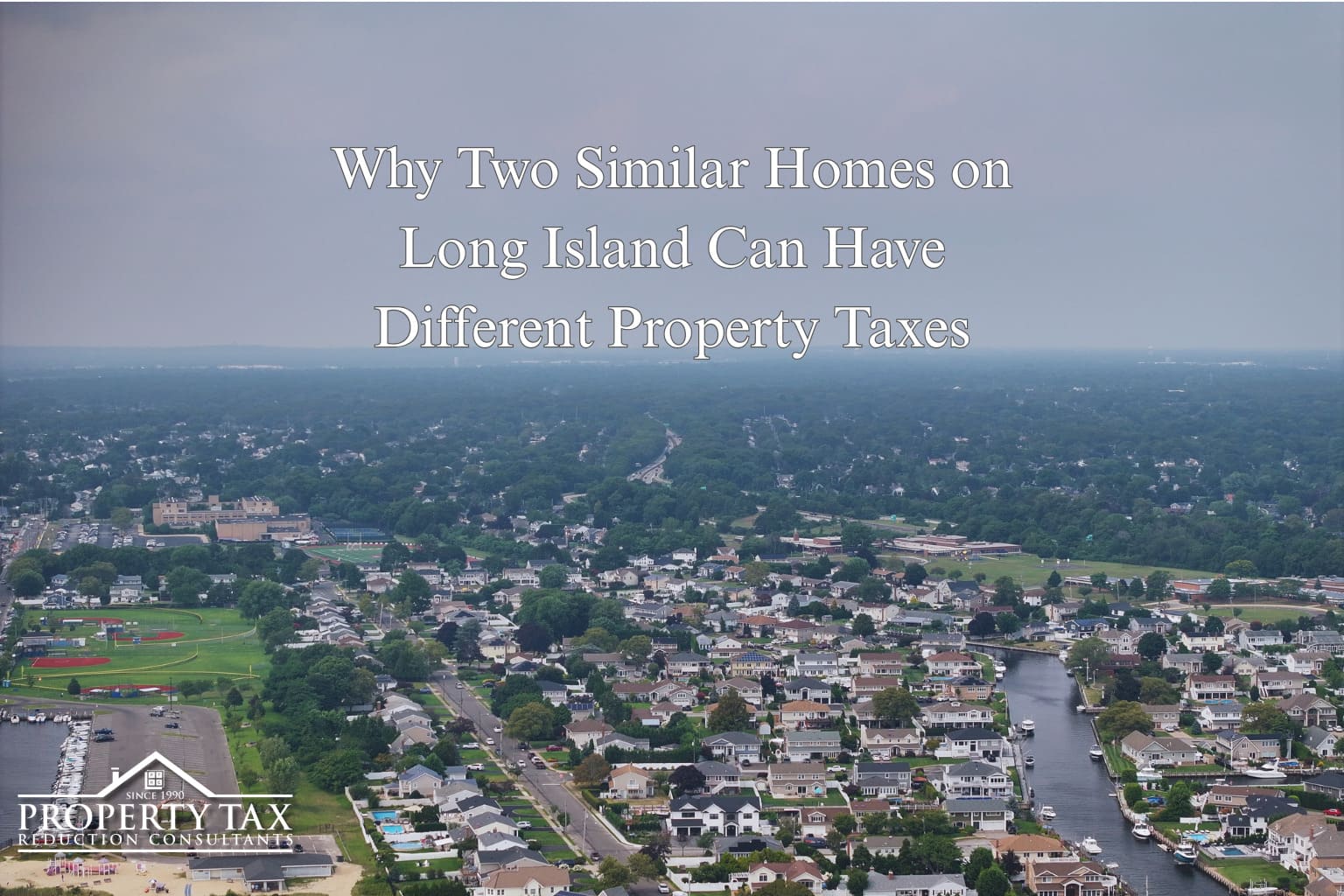
Why Two Similar Homes on Long Island Can Have Different Property Taxes
If you’ve ever compared your property tax bill with a neighbor’s, you may have wondered: Why are we paying different amounts for similar homes?
Across Long Island, it’s surprisingly common to see noticeable property taxes Long Island differences - even between houses that look nearly identical. These discrepancies are often caused by a combination of assessment practices, exemptions, and timing.
Understanding why these differences happen is the first step toward making sure you’re not overpaying. Let’s break it down.
The Basics of Property Taxes on Long Island
Before diving into the differences, it’s important to understand how property taxes are calculated.
Assessed Value
This is the value assigned to your property by the local assessor. It determines how much of the tax burden you carry.
Tax Rates
Each municipality sets its own tax rate based on budget needs. This rate is applied to your assessed value.
School Taxes
On Long Island, school taxes make up the largest portion of your bill often more than half.
Even small differences in any of these factors can lead to noticeable differences in tax bills.
The Biggest Reason: Differences in Assessed Value
The most common reason for unequal taxes is differences in assessed value.
Assessed Value vs Market Value
Your home’s assessed value doesn’t always match what it would sell for. If your home is assessed too high compared to market value, you’ll pay more property taxes.This is how P.T.R.C., Inc. can help Long Island Homeowners like you, we help lower your assessed value for tax purposes.
Outdated Valuations
Assessments aren’t always updated in real time. Some properties may reflect recent market conditions, while others lag behind.
This is where P.T.R.C., Inc. plays a key role identifying mismatches between assessed and actual market value.
Other Key Factors That Cause Tax Differences
Several additional factors contribute to unequal property tax assessments:
Equalization Rates
These rates adjust assessments to reflect market value, but they vary by location and can create inconsistencies.
Property Data Errors
Incorrect details like square footage or number of bathrooms can lead to inflated assessments.
Timing of Purchase
New buyers often face reassessments based on purchase price, while long-time owners may have older, lower assessments.
Renovations or Improvements
Upgrades like additions or renovations can increase assessed value—but not always consistently across similar homes.
P.T.R.C., Inc. audits all these factors to uncover hidden reasons behind tax discrepancies.
Exemptions Can Create Big Differences
Tax exemptions can significantly reduce what a homeowner pays.
STAR Program (Basic and Enhanced STAR)
New York’s School Tax Relief program lowers school taxes for eligible homeowners.
Senior Citizens
The Senior Citizens Property Tax Exemption provides tax relief to eligible homeowners aged 65 or older with an income of $58,399 or less (as of 2026, this income amount changes yearly). Depending on income, the exemption can reduce your taxable value between 5% and 65% on school, county, and town taxes.
Limited Income and Disabilities
The Persons with Disabilities and Limited Incomes Exemption provides tax relief to eligible homeowners with a documented physical or mental disability with an income of $58,399 (as of 2026) or less. Homeowners must submit proof of disability through an award letter. Depending on income, the exemption can reduce your taxable value between 5% and 50% on school, county, town taxes (special district taxes are not included
Firefighters and Ambulance Workers
Active volunteer firefighters and ambulance workers with at least two years of service may qualify for a 10% exemption on the property's assessed value. The exemption applies only to primary residences within the jurisdiction served by the department or company. Lifetime exemptions are available for volunteers with 20+ years of service.
Veteran Exemptions
Veterans and their families may qualify for property tax exemptions recognizing their service. Available exemptions include:
- Alternative Veterans Exemption: For those who served during wartime or received an expeditionary medal.
- Cold War Veterans Exemption: For those who served between September 2, 1945, and December 26, 1991.
- Eligible Funds Exemption: For veterans who used military pension, mustering-out pay, or other service-related funds to purchase their home.
Home Improvement
The Home Improvement Exemption (HIEX) provides an eight-year, decreasing property tax break for permitted improvements made to one- and two-family homes that increase the home’s assessed value. The exemption applies only to the main structure and not to sheds, pools, landscaping, or similar features. Eligible improvements include additions like new rooms, finished basements or attics, dormers, conversions of garages or porches, central air systems, and full renovations. Cosmetic upgrades, fixture replacements, and temporary features do not qualify. To be eligible, the improvement must raise the property’s market value by between $3,000 and $80,000. The original structure must also be at least five years old. All improvements must be inspected and fully assessed by the Department of Assessment.
Clergy
Eligible members of the clergy may qualify for property tax exemptions on their primary residence in recognition of their spiritual service to the community.
Additional savings are available for qualifying homeowners. If one homeowner has exemptions and another doesn’t, their tax bills can differ dramatically.
Location Still Matters (Even Nearby Homes)
Even within the same neighborhood, location plays a role. Major factors such as busy roads, stop signs, commercial properties, etc.
School Districts
Different school districts have different tax rates—even if homes are close together.
Town and Village Taxes
Local services and budgets vary, leading to differences in tax rates between municipalities.
Why Some Homeowners End Up Overpaying
Many homeowners pay more than they should simply because they don’t take action. Many homeowners fear their taxes will increase.
Never Filing Grievances
If you don’t challenge your assessment, it may remain inflated indefinitely.
Assessment Inertia
Assessments don’t always adjust downward when market values change.
This is where P.T.R.C., Inc. becomes essential - helping homeowners identify and correct over-assessments.
How to Tell If You’re Paying Too Much
Here’s how to check if your taxes are too high:
Compare Similar Homes
Look at nearby properties with similar size and features.
Review Public Records
Check your property details for accuracy.
Monitor Market Trends
If local home values are dropping but your assessment isn’t, it may be too high.
P.T.R.C., Inc. performs these comparisons professionally using detailed local data.
How P.T.R.C., Inc. Helps Level the Playing Field
Working with P.T.R.C., Inc. provides a major advantage:
Market Comparisons
They analyze comparable sales to determine fair value.
Grievance Filing
They handle the entire appeal process from start to finish.
Long-Term Strategy
They help ensure your property remains fairly assessed year after year.
FAQs
Why does my neighbor pay less in property taxes?
They may have a lower assessed value, exemptions, or an outdated assessment.
Can I reduce my taxes to match similar homes?
Yes, if your home is over-assessed, filing a grievance can help lower your taxes.
Do renovations always increase taxes?
Not always but they can raise your assessed value depending on the improvement.
How often are property assessments updated?
It varies by municipality and market activity.
Are tax differences normal?
Some variation is normal, but large differences may indicate over-assessment.
Can errors in my property record be corrected?
Yes, and correcting errors can help reduce your tax burden.
Conclusion: Similar Homes Shouldn’t Mean Unequal Taxes
While some variation in taxes is expected, significant property taxes Long Island differences often point to deeper issues like inaccurate assessments or missed exemptions.
The key is knowing when to take action.
With expert help from P.T.R.C., Inc., you can identify inequities, correct over-assessments, and ensure you’re paying only your fair share.
Visit https://ptrc.com/ to review your assessment and start saving today.
Return
