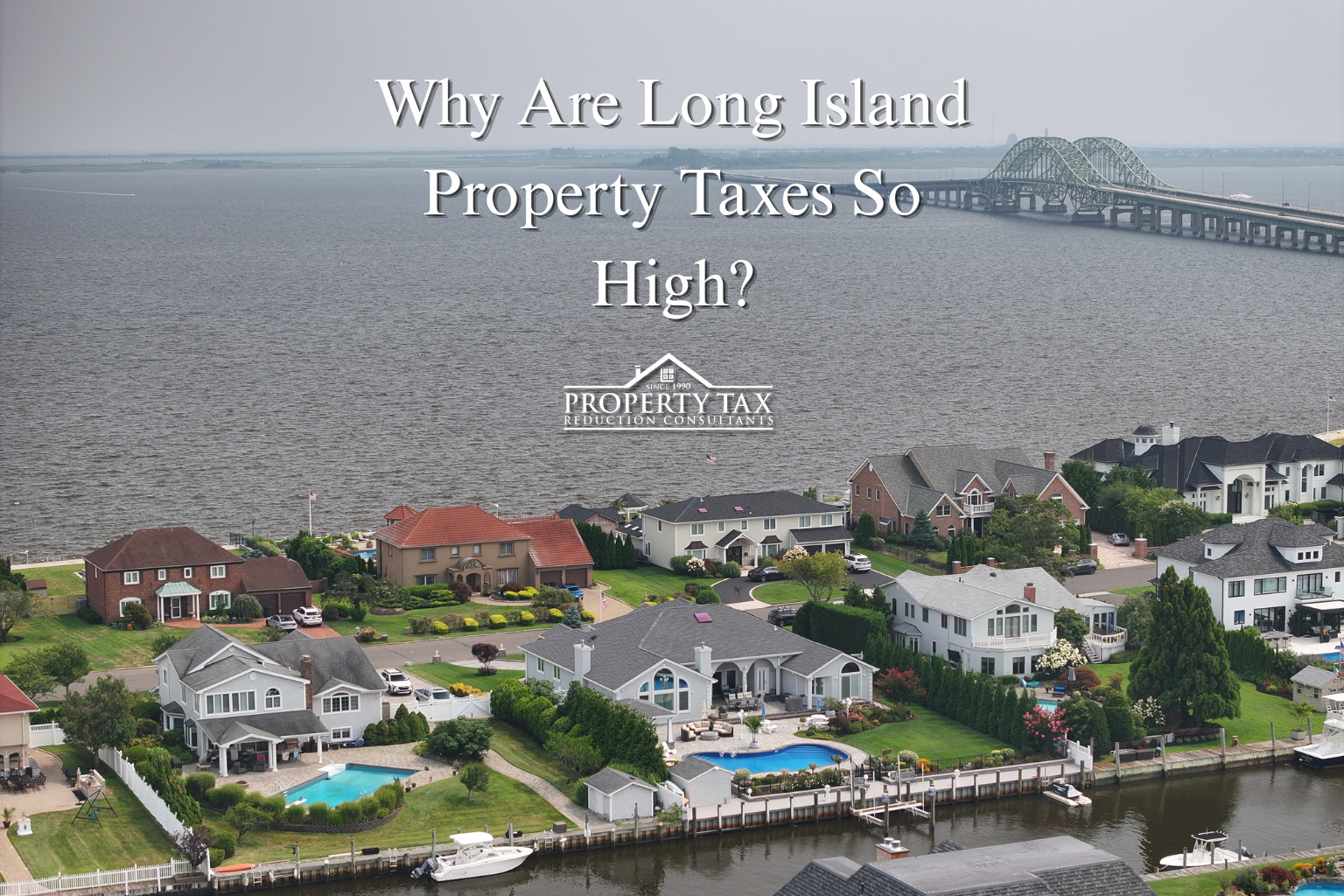
Why Are Long Island Property Taxes So High?
Long Island property taxes can be high because homeowners may pay taxes that support school districts, counties, towns, villages, special districts and other local services. Your individual property tax bill can also be affected by your property's assessment, applicable tax rates and the taxing jurisdictions where your home is located.
- A homeowner's property tax bill is not determined by the home's market value alone.
Two homes with similar market values can have very different tax bills depending on where they are located, how they are assessed and which taxing districts apply to them.
Understanding these factors can help explain why Long Island property taxes vary from one community to another—and why homeowners may want to review their assessments when their property tax bill appears unusually high.
How Are Property Taxes Calculated on Long Island?
At a basic level, property taxes are based on a property's assessment and the applicable tax rates or tax calculations used by the jurisdictions that serve the property.
A simplified way to understand the process is:
Property Assessment × Applicable Tax Rates = Property Tax Obligation
However, the actual calculation can be more complicated.
A Long Island homeowner may be subject to taxes associated with multiple jurisdictions, such as:
- County government
- Town or city government
- School district
- Village, where applicable
- Fire districts
- Library districts
- Other special districts
Each taxing authority may have its own budget and tax levy. These amounts are then distributed according to the applicable property tax system.
This is one reason why homeowners in neighboring communities can have significantly different property tax bills.
How Much Do School Taxes Contribute to Long Island Property Taxes?
School taxes are an important part of many Long Island property tax bills.
Each school district has its own:
- Annual budget
- Tax levy
- Tax base
- Student population
- Facilities and operational costs
The amount a homeowner pays toward school taxes depends on the property's assessment and the tax calculations used by the school district.
Why School District Boundaries Matter
Two similar homes located only a few blocks apart may be served by different school districts.
If those school districts have different budgets, tax levies or assessment bases, the homeowners may receive very different tax bills.
This means that property location matters in more ways than just the value of the home.
- The school district associated with a property can be an important factor in determining the overall property tax bill.
How Do Property Assessments Affect Long Island Property Taxes?
Your property assessment is one of the factors used to determine your share of the local property tax burden.
However, it is important to understand:
Market value ≠ assessed value ≠ property tax bill.
Market value generally refers to what a property may reasonably sell for under normal market conditions.
Assessed value is the value assigned to the property for property tax purposes.
Your tax bill is the final amount calculated after applicable assessments, tax rates, tax levies, exemptions and taxing jurisdictions are taken into account.
For a more detailed explanation, read our guide on how property assessments affect your taxes.
If your property assessment is higher than it should be, it may affect your share of the property tax burden.
Why Can Two Similar Long Island Homes Have Different Tax Bills?
Two homes can look nearly identical and have similar market values but still have very different property tax bills.
Some possible reasons include:
Different Property Assessments
One property may have a higher assessed value than another.
Different Municipalities
Properties located in different towns, cities or villages may be subject to different taxes and tax rates.
Different School Districts
School district boundaries can have a significant effect on a homeowner's tax bill.
Different Taxing Districts
Special districts, including fire and library districts, can vary depending on the property's location.
Property Tax Exemptions
One homeowner may qualify for exemptions that reduce the taxable amount or otherwise affect the tax bill.
Assessment History
The assessment history of two similar properties may not be identical.
Differences in Property Characteristics
Even similar-looking homes may differ in recorded square footage, lot size, improvements or other characteristics that affect assessment.
This is why comparing tax bills alone does not always provide a complete picture.
Why Are Nassau County Property Taxes So High?
Nassau County property taxes can be influenced by multiple layers of local taxation, including school districts, county taxes, local governments and special districts.
A homeowner's individual tax bill will depend on the specific property and its location.
Nassau County School Taxes
School taxes can make up a significant portion of the overall property tax burden.
Because Nassau County includes multiple school districts, tax bills can vary depending on the district serving the property.
School budgets, tax levies and the assessment base can all affect the amount allocated to individual properties.
Nassau County Property Assessments
Nassau County uses its own countywide assessment system.
A property's assessment is an important part of determining its share of applicable property taxes.
Homeowners who believe their assessment may be excessive may have an opportunity to challenge it through the applicable grievance process.
P.T.R.C. helps homeowners understand their options through its Nassau County property tax reduction services.
Nassau County Taxing Districts
Depending on where a property is located, homeowners may pay taxes that support multiple government entities and special districts.
These may include:
- County services
- Town or city services
- School districts
- Villages
- Fire districts
- Other special districts
The combination of these taxing authorities can contribute to a higher overall property tax bill.
Nassau County Assessment Grievances
If a homeowner believes the property's assessment is too high, the assessment—not the tax rate itself—may be subject to challenge.
Understanding the difference is important.
Learn more about Property Tax Appeal vs. Tax Grievance and how the assessment review process works.
Why Are Suffolk County Property Taxes So High?
Suffolk County property taxes are also influenced by multiple taxing jurisdictions, including local governments, school districts and special districts.
However, Suffolk County's assessment system differs from Nassau County's.
Suffolk County includes multiple towns and municipalities, and assessment procedures can vary depending on where the property is located.
School District Taxes in Suffolk County
As in Nassau County, school district taxes can represent a significant portion of a homeowner's total property tax bill.
Different school districts have different budgets and tax levies, which can result in different tax obligations for similar properties located in different districts.
Local Assessment Systems
Suffolk County homeowners should review the assessment information provided by the applicable local assessing authority.
Because local processes can vary, it is important to understand which municipality is responsible for assessing your property.
Multiple Taxing Jurisdictions
A Suffolk County property may be subject to taxes from several entities, depending on its location.
This can include:
- Suffolk County
- Town or city government
- School district
- Village
- Fire district
- Library district
- Other special districts
If you believe your property's assessment may be excessive, learn more about Suffolk County property tax reduction with P.T.R.C.
Does a Higher Home Value Always Mean Higher Property Taxes?
No.
A higher market value does not automatically mean a homeowner will have a proportionally higher property tax bill.
Property tax systems rely on more than market value alone.
The final amount may depend on:
- How the property is assessed
- The local assessment system
- Applicable tax rates
- Tax levies
- School district
- Other taxing districts
- Available exemptions
For this reason, two homes with similar market values can have very different tax bills.
The reverse can also be true: a lower-priced home may have a higher property tax bill than a more expensive home in another municipality.
Can You Lower Property Taxes on Long Island?
Homeowners generally cannot individually control local tax rates, school budgets or the tax levies established by local taxing authorities.
However, if you believe your property assessment is excessive or incorrect, you may have the option to challenge the assessment through a property tax grievance.
A successful assessment reduction may potentially reduce your share of the applicable property tax burden.
The process can vary depending on whether the property is located in Nassau County, Suffolk County or another New York jurisdiction.
To understand the difference between challenging an assessment and pursuing further review, read Property Tax Appeal vs. Tax Grievance: What Long Island Homeowners Need to Know.
You can also learn what happens after filing a property tax grievance.
For homeowners who want professional assistance, P.T.R.C. provides Long Island property tax reduction services.
How Does a Property Tax Grievance Help?
A property tax grievance gives eligible property owners an opportunity to challenge an assessment they believe is excessive or incorrect.
The general process can be understood as:
Review Assessment → Identify Potential Overassessment → File Grievance → Receive Determination → Pursue Further Review if Eligible
The process typically begins by reviewing the property's assessment and relevant information.
Evidence may include:
- Comparable property sales
- Assessments of similar properties
- Property characteristics
- Market value information
- Errors in property records
If the assessment appears excessive, a grievance may be filed with the appropriate reviewing authority before the applicable deadline.
For a detailed explanation, read our guide to the property tax grievance process.
What Can Homeowners Do If Their Property Is Over-Assessed?
If you believe your Long Island property may be over-assessed, consider taking the following steps.
1. Review Your Property Assessment
Check your current assessment and compare it with previous years.
Look for significant changes that may require further review.
2. Compare Similar Properties
Review properties that are similar in:
- Location
- Size
- Age
- Style
- Condition
- Features
3. Check Your Property Information
Make sure the information used to describe your property is accurate.
Review details such as:
- Square footage
- Lot size
- Bedrooms
- Bathrooms
- Improvements
- Property condition
4. Research Comparable Sales
Recent sales of similar properties may provide useful information when evaluating market value.
5. Review Grievance Deadlines
Property tax grievance deadlines are important and can vary based on the applicable assessment system.
Missing a deadline may affect your ability to challenge the assessment for that filing period.
6. Consider Professional Assistance
A property tax professional can review available assessment information and help determine whether filing a grievance may make sense.
P.T.R.C. helps Long Island homeowners review potentially excessive assessments and navigate the property tax grievance process.
Frequently Asked Questions About Long Island Property Taxes
Why are Long Island property taxes so high?
Long Island property taxes can be high because homeowners may pay taxes that support school districts, counties, towns, villages and special districts. Individual tax bills also depend on property assessments, tax rates and exemptions.
Which Long Island county has the highest property taxes?
Property taxes can vary significantly within both Nassau and Suffolk County. The amount paid by an individual homeowner depends on the property's location, assessment, school district and applicable taxing jurisdictions.
Comparing counties alone does not always provide an accurate picture of what an individual homeowner will pay.
Why are Nassau County property taxes so high?
Nassau County homeowners may pay taxes that support multiple local jurisdictions, including school districts, county and local governments and special districts. Property assessments and local tax calculations also affect individual tax bills.
Why are Suffolk County property taxes so high?
Suffolk County property taxes can be affected by school district taxes, local government taxes, special districts and the property's assessment. Tax obligations can vary significantly between municipalities.
Can I reduce my Long Island property taxes?
You generally cannot control local tax rates. However, if your property assessment is excessive or incorrect, you may be able to challenge it through a property tax grievance.
Does appealing my assessment lower my tax bill?
A successful assessment challenge may reduce your property tax obligation. However, the exact impact depends on the applicable assessment and tax system, tax rates and other factors.
Are Long Island property taxes based on market value?
Not directly. Market value, assessed value and the final tax bill are different. Property taxes are based on the applicable assessment system and tax calculations, not simply on the current market value of the home.
Why do my neighbors pay less in property taxes?
Your neighbors may have a different assessment, school district, taxing districts, exemptions or property characteristics. Even similar homes can have different tax obligations.
Think Your Long Island Property Assessment May Be Too High?
High property taxes do not always mean that your assessment is incorrect. However, if your property's assessment appears excessive compared with similar properties or available market information, it may be worth reviewing.
P.T.R.C., Inc. helps Long Island homeowners review their assessments and determine whether a property tax grievance may provide an opportunity for a property tax reduction.
Learn more about Long Island property tax reduction with P.T.R.C.
Return
